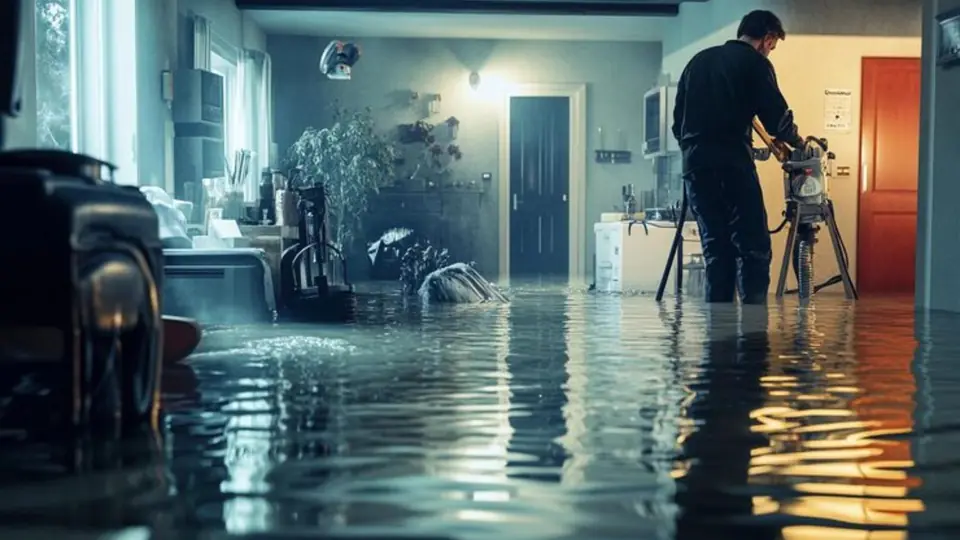
Emergency water mitigation in Spanish Fork is about speed. When a pipe lets go or an appliance floods a room, the first job is to shut off the source and make sure the water stops spreading. Our 24/7 emergency line is the starting point, and until a crew arrives you can shut off the main valve, lift valuables and keep people out of the wet area.
Mitigation is the damage-control stage of a water loss. It is not the final repair. It keeps the damage small, documents it, and sets up the rebuild that may follow.
Water running down a wall or soaking the carpet? That is what mitigation stops.
Most people do not search for mitigation. They search for a wet ceiling, water in the basement or a floor that feels spongy. Those symptoms all point to the same need, which is controlling where the water goes and how fast it dries. In the trade that work is called water mitigation, and it is what separates a repair that stays small from one that grows into a full tear-out.
What happens in the first 72 hours
| Stage | What happens | Why it matters |
|---|---|---|
| Stop the source | Valve closed, appliance disconnected or pipe isolated | Nothing dries while water is still coming in |
| Extraction | Standing water and soaked pad removed | Liquid water is the fastest thing to remove |
| Moisture mapping | Meters and thermal imaging find wet materials | Shows what is wet behind surfaces that look dry |
| Drying setup | Air movers and dehumidifiers placed and balanced | Moves moisture out of materials and out of the air |
| Daily readings | Moisture checked and equipment adjusted | Drying stops only when readings reach goals, not when it feels dry |
These stages follow the structure of the industry standard ANSI/IICRC S500 for water damage restoration. You can ask any company you are considering whether its crews work to it.
Structural drying
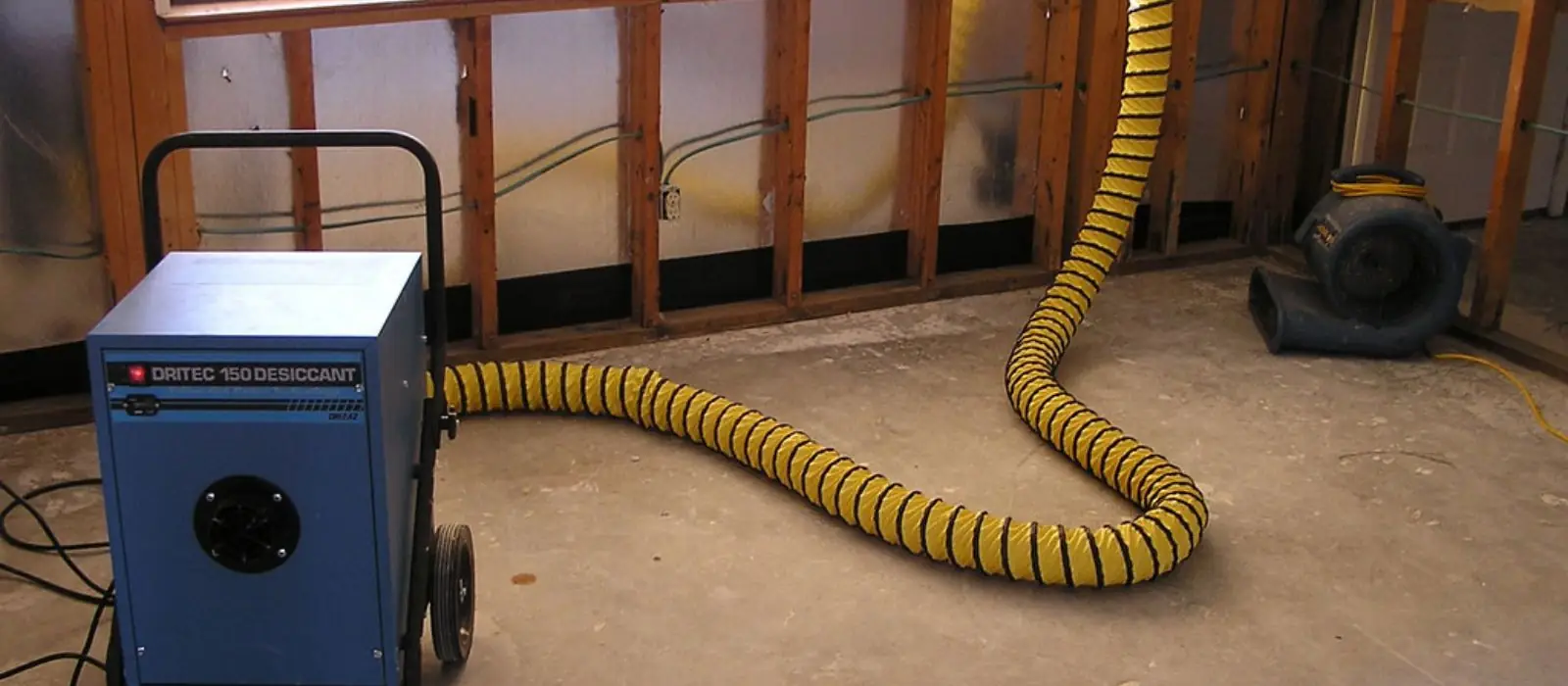
Structural drying is the part of mitigation that takes days. Air movers push dry air across wet surfaces, and low-grain refrigerant (LGR) dehumidifiers pull the moisture out of the air so the materials can keep releasing it. Desiccant units are used in some conditions, and specialized injection systems can push dry air into a wall cavity through small holes.
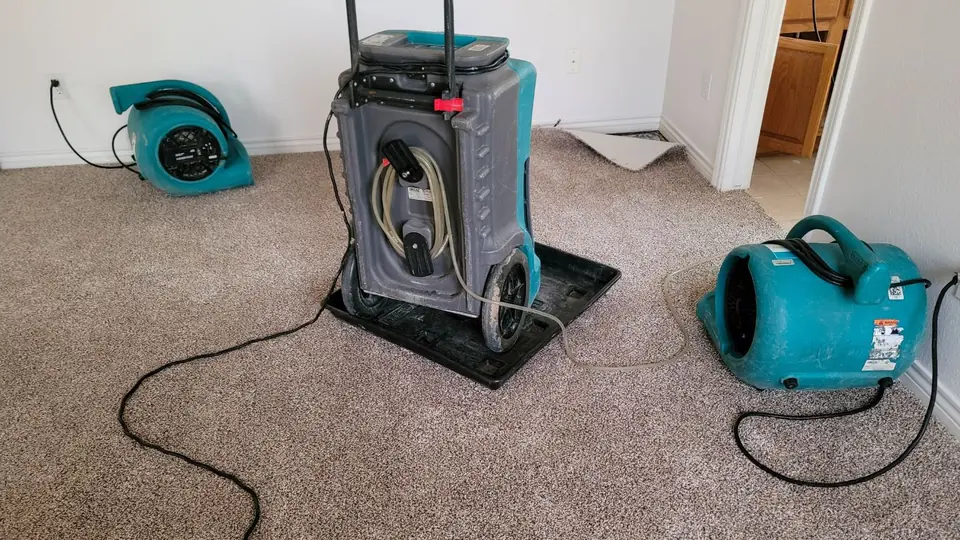
A technician reads moisture with meters and thermal imaging, sets drying goals for each material and adjusts the equipment every visit. The job is done when readings show the structure at its dry standard, which is why a job that feels dry on day one is rarely finished.
Drying time depends on the water category, the materials and the weather, and it is measured in days, not hours. If you have wondered about renting drying equipment yourself, the honest answer is that placement and readings are the hard part. Ask whoever you hire to explain the equipment count and why it is sized the way it is.
When water damage cannot wait
Some situations need a crew immediately. Water in a wall cavity, water that has soaked carpet and pad, water in more than one room, and any water from a sewer or toilet line all belong in that group. After hours is when many of these happen, because pipes freeze overnight and appliances fail while no one is home.
Same-day response is available when a crew is available, and our line answers overnight and on weekends. While you wait, keep the main valve closed, keep electronics up and away, and do not turn on ceiling fixtures under a wet ceiling.
Water has already reached drywall or flooring? Call now and we will explain the next steps.
☎ Call (385) 988-9410Mitigation versus extraction, cleanup and repair
These words overlap, so here is how we use them. Emergency water removal pulls out standing water. Mitigation covers the whole damage-control stage, including drying. Water damage cleanup handles debris, contaminated materials and sanitizing once the source is stopped, and water damage repair rebuilds what had to come out.
A single loss can use all four, in that order. The scope depends on how long the water sat, how far it traveled and what it touched.
What changes the cost of mitigation
| Cost factor | How it changes the job |
|---|---|
| Water category | Category 2 and 3 water add protective steps and removal of porous materials. |
| Affected square footage | More area means more equipment and more drying time. |
| Materials involved | Hardwood, plaster and insulation dry differently from carpet and laminate. |
| Drying days | Equipment time and the number of monitoring visits depend on how fast readings improve. |
| Rebuild scope | Whatever has to be removed becomes a separate repair estimate. |
Coverage depends on your policy. Sudden and accidental water damage is often covered, while gradual leaks and neglect often are not, so check your policy or ask your insurer before assuming either way. Photos, moisture readings and a written scope make the claim easier to explain. For your own number, call and we will explain scope and price before any work starts.
Where we do this work
We mitigate water losses across Spanish Fork and in nearby towns, including Springville, Salem and Provo. Older homes and newer builds behave differently, so the crew checks what your house is actually made of before choosing equipment.
Questions about water mitigation
Yes. Our emergency line is open 24 hours a day, every day. Same-day response is available when a crew is available, and the dispatcher will tell you what to do safely while you wait.
Mitigation limits the damage by stopping the source, removing water and drying. Remediation is a broader term, often used for contaminated water or for mold, and it focuses on removing and treating affected materials. Many projects use both.
Air movers, LGR dehumidifiers, moisture meters and thermal imaging cameras are the core. Some jobs add desiccant dehumidifiers or injection drying for wall cavities. Equipment is placed to fit the room and adjusted at each monitoring visit.
Drying usually takes several days, depending on the water category, the materials and conditions. Daily readings decide when it is done, not the calendar.
Sometimes. Hardwood that is caught early may dry in place, although it can cup as it dries. Whether it is salvageable depends on how long it was wet, so tell the dispatcher when the water started.
No. Mitigation controls the damage and dries the structure. Rebuilding drywall, flooring and paint is a separate scope, covered on our water damage repair page.