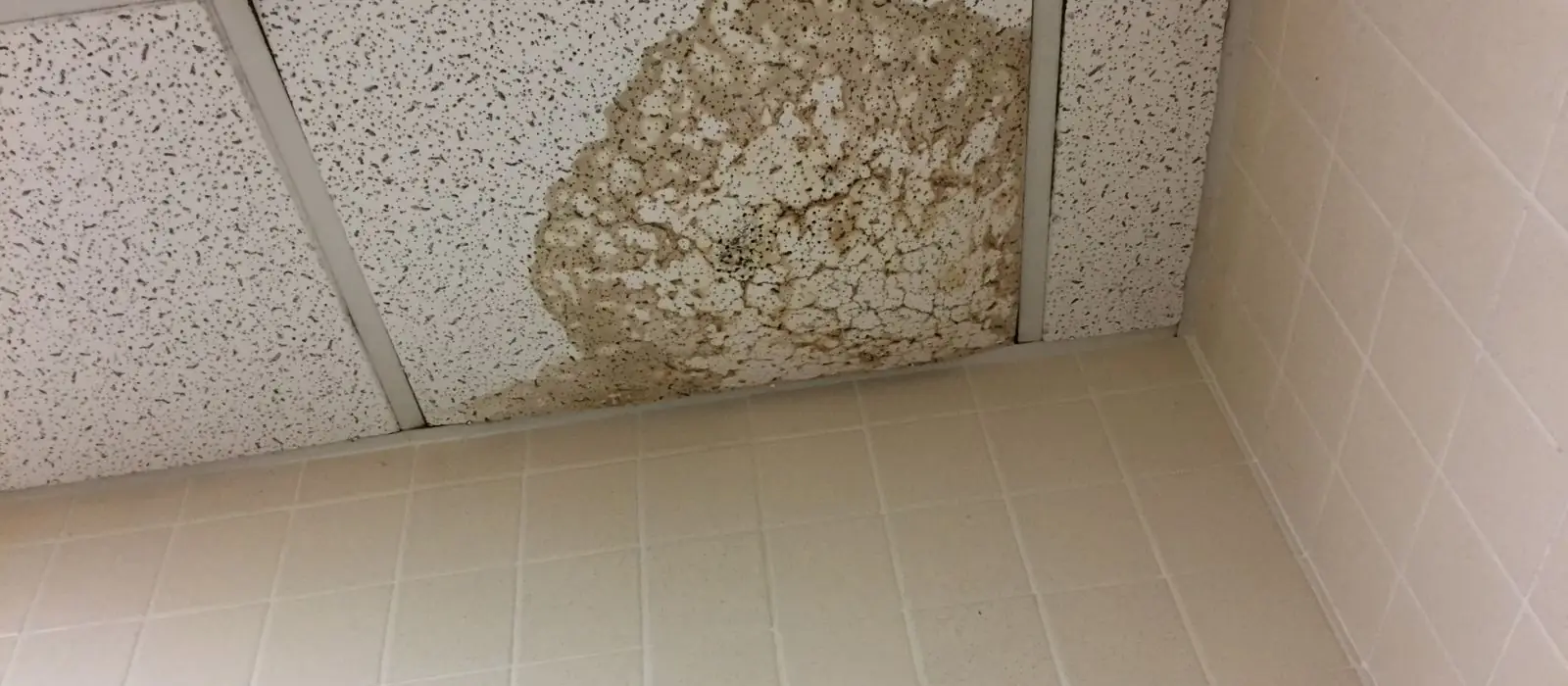
The short answer: it depends on what the water did to the board
Patch a ceiling when the drywall is still flat, firm and dry, and the water that reached it was clean. Replace the affected board when it sags, bulges, crumbles, or has been wet long enough to turn soft. A brown stain alone does not decide it. The condition of the material behind the stain does.
Three things drive the call: how the board looks and feels, how long it stayed wet, and what kind of water soaked it. A small ring from a one-time drip is a different job than a ceiling that has held a plumbing leak for weeks.
Before any of that, one safety rule. Do not stand under a bulging ceiling. Water pools in the bulge, and the board can let go without warning.
Safety first: a bulging ceiling is a load
A bubble in a ceiling is usually trapped water, and water is heavy. Drywall that has absorbed it loses strength, so the weight sits on a weakened board. Keep people and pets out of the room below it.
If the ceiling is bulging and electricity is nearby, treat the light fixtures and outlets as unsafe. Shut off power to that area at the breaker panel if you can reach it without walking under the damage. Then call a professional.
Trained crews often relieve a bulge on purpose by making a small controlled opening to let the water drain into a bucket. That is better done by someone with protective gear and a plan for the insulation above, not by a homeowner with a screwdriver on a ladder.
Repair or replace: a decision table
| Condition you see | Usually | Why |
|---|---|---|
| Small dry stain, board flat and firm | Repair | The board kept its strength. Seal the stain, then repaint. |
| Stain that returns after painting | Find the source first | Moisture is still arriving, so cosmetic work will fail again. |
| Sagging or bulging section | Replace | Wet gypsum loses strength and does not recover its shape. |
| Soft, crumbling or pulling off the tape | Replace | The paper face and core have broken down. |
| Wet insulation above the board | Replace board, remove insulation | Wet insulation holds water against the ceiling and dries slowly. |
| Category 2 or 3 water (dirty or contaminated) | Replace | Porous materials that touched contaminated water are removed, not cleaned. |
| Wet for a long stretch before discovery | Replace | Long exposure means deeper saturation and a higher chance of microbial growth. |
| Large area affected | Usually replace | Patching big areas leaves visible seams and hides damp spots. |
When a patch is enough
Patching works when the water was clean, the leak was brief, and the board stayed firm and flat. A moisture meter should confirm the drywall is back to a normal dry reading before anything is sealed. Painting over a damp board only locks the problem in.
Once the reading is good, the stain gets a stain-blocking primer and the finish coat goes on. If the stain ghosts through after painting, that is a sign moisture or residue is still in the board.
Smaller, localized repairs also depend on the rest of the cavity being sound. Crews check above the ceiling with a moisture meter and a thermal imaging camera, because a dry-looking surface can sit under wet insulation.
When the board has to come down
Sagging, bulging, soft spots and crumbling edges all point to replacement. So does any contact with Category 3 water, such as a sewage backup that rose from a floor above. Drywall is porous, and S500 practice treats porous materials that touched grossly contaminated water as material to remove.
Removal usually goes a little past the visible damage. Crews cut back to dry, solid board and then check the framing, which is the same logic described in our guide to water damage mitigation.
Insulation above the ceiling is part of the decision. Batts that absorbed water pull moisture against the new board if they stay. They generally come out, and the cavity is dried before closing it up.
If your ceiling is sagging, bulging or still dripping, call our 24/7 emergency line and we will talk through what to do before anyone enters the room.
☎ Call (385) 988-9410Texture and finish change the repair, not the diagnosis
Ceiling texture matters for the cosmetic result. Smooth ceilings show every patch edge. Popcorn, knockdown and orange-peel finishes hide small repairs better, but matching an old texture takes skill and the paint sheen has to match too.
Replacement of a large section often means refinishing the whole ceiling plane, so the new area does not read as a different color. That is a rebuild choice, and it is worth planning with the cost in mind.
Texture never changes whether the board is safe. A well-textured ceiling that is soft behind the surface still comes down.
What a professional documents before deciding
- Moisture readings on the ceiling board, the framing and the insulation above.
- The source of the water and whether it has stopped.
- The water category and how long the materials were wet.
- The size of the affected area in each room.
- Photos for your records, which help when you talk with your insurer.
Neighbors in Springville and Salem ask us the same ceiling questions, and the answer always starts with this record. Insurance questions are easier with it in hand. Sudden and accidental water damage is often covered, while slow leaks often are not, so check your policy or ask your insurer. If you want the repair side explained in full, see how we handle water damage repair after the drying is done.
Spanish Fork note: irrigation lines, frost and roof leaks
Spanish Fork runs a separate pressurized irrigation system for landscaping, typically from mid-April to mid-October, and the homeowner is responsible for the line beyond the first fitting after the meter. A leak on your side of that fitting is yours to fix, so shut the system off and call a plumber for the repair before you schedule ceiling work.
Spanish Fork counted 42,602 residents in the 2020 Census and the 2025 estimate is 48,837, so many homes are newer builds. Newer attics still collect condensation, so check the attic when a ceiling stain shows up.
About 80.4% of Spanish Fork homes are owner-occupied, which means most ceiling decisions are also the owner's insurance decisions. Take photos before anything is removed and read your policy first.
Source types: city utility page, city structural design criteria, U.S. Census Bureau
Frequently asked questions
Only if the board is dry, firm and the leak has been fixed. Use a stain-blocking primer first, because ordinary paint lets the stain bleed back through.
Treat it as one. The bulge holds water and the board can fall. Stay out from under it, turn off power to the area if you can safely reach the panel, and call a professional.
Usually yes. Wet batts dry slowly and keep moisture against the ceiling board. A moisture meter above the ceiling shows whether it can stay.
Sudden and accidental water damage is often covered, and gradual leaks often are not. Check your policy or ask your insurer, and keep photos and moisture readings.
Readings on the board and framing match a dry reference reading, taken with a moisture meter on a day-to-day basis. Eyes and fingers are not enough.
The owner is responsible for the line beyond the first fitting after the meter. If that line leaks into a wall or ceiling, call a plumber to repair it and a restoration crew to dry the structure.