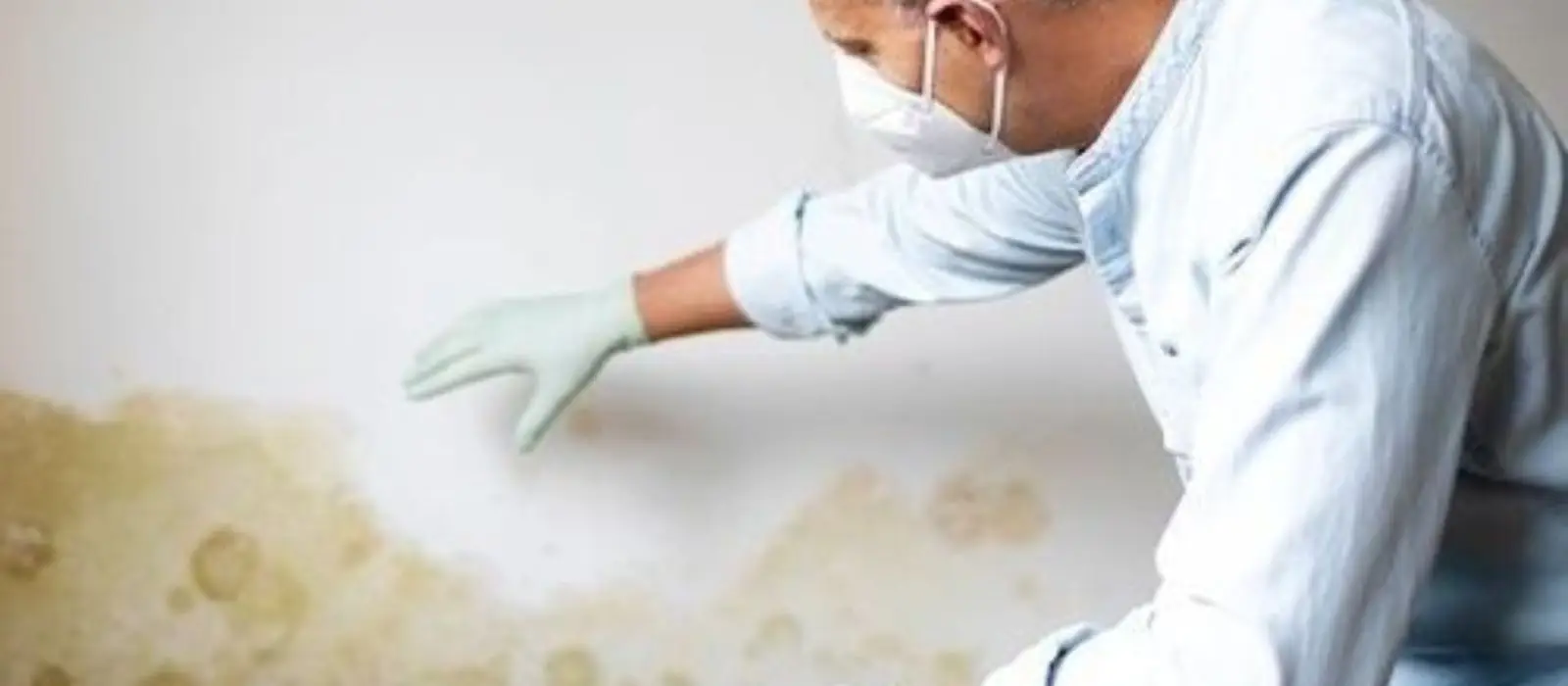
The signs you can see, smell and hear
Look for discoloration first. Yellow or brown stains on a wall, bubbling or peeling paint, wallpaper seams that lift, and a baseboard that has warped or pulled away all point to moisture behind the surface.
Your nose and ears help too. A musty smell that comes back after cleaning suggests damp material somewhere out of sight. A faint drip, hiss or trickle inside a wall when no fixture is running can mean a leaking supply line.
Press gently on suspect drywall. If it feels soft, crumbles, or sags, the paper face and gypsum core have absorbed water. One sign alone does not prove a leak, but two or three together deserve a professional look.
Sign, likely meaning and next step
| What you notice | What it may mean | Sensible next step |
|---|---|---|
| Brown or yellow stain on wall or ceiling | A leak above or inside the wall, possibly old and dried | Mark the edge with a pencil, check later for growth |
| Bubbling or peeling paint | Moisture pushing through from behind | Check for plumbing on the other side, call for a moisture reading |
| Warped baseboard or swollen trim | Wicking from a wet floor or wall base | Look for source near fixtures, avoid pulling trim yourself |
| Musty smell with no visible source | Damp insulation or drywall, or hidden growth | Request a moisture inspection of nearby walls |
| Soft, crumbly or sagging drywall | Material has absorbed water for some time | Stop the source, do not press or cut it open |
| Water bill rises with no change in use | A running or leaking line somewhere | Check the meter with all fixtures off, then call a plumber |
| Sound of dripping inside a wall | An active supply or drain leak | Shut off water to the area and call right away |
Why drywall hides the problem
Drywall wicks. Water at the bottom of a wall climbs upward through the paper and gypsum, so the stain you see can sit well above the actual wet area. The visible patch is often only the leading edge.
Behind the surface, insulation can hold water for a long time, and wall cavities dry slowly without airflow. That is how a small plumbing leak can quietly soak a framed wall before anyone notices a mark.
How professionals confirm water behind a wall
Guessing is expensive, so crews use instruments. A pin or pinless moisture meter reads moisture content in drywall, wood and trim without opening the wall. Readings are compared against a dry reference from an unaffected part of the same room.
A thermal imaging camera adds a picture. Wet materials often show as cooler patches, because evaporation pulls heat out. The camera does not measure moisture by itself, so a technician follows up with the meter to confirm the pattern.
Moisture mapping ties these together. The crew marks where readings run high, traces them back toward the source, and decides whether drying in place is enough or whether wet material must come out. This is the work behind our water mitigation service.
Seeing two or more of these signs? Call us for a moisture assessment before the wall gets worse.
☎ Call (385) 988-9410What to do while you wait for help
- Shut off the water supply to the suspected area or the whole house if you cannot tell the source.
- Photograph the stains and note the date, so changes are easy to track.
- Move furniture, rugs and stored boxes away from the wall.
- Run a fan across the wall if the area is safe, and keep the room ventilated.
- Do not cut open drywall, tear out insulation or pull off baseboard unless you know the source is off.
- Keep records of repair attempts and receipts for your insurer.
If the wall is hot, the ceiling is bulging, or any outlet or fixture near the wet area has water in it, stay clear and treat it as an emergency. Shut off power to that area at the breaker only if you can reach it without standing in water.
When a hidden leak becomes mold
Mold needs moisture, and a wet wall cavity gives it plenty of time. If the wet area is not dried promptly, growth can start on the back of drywall or on framing where you cannot see it.
That is why a musty smell deserves attention even without a stain. If growth is found, testing and remediation follow ANSI/IICRC S520, and health questions belong to a physician. Our mold remediation team handles the building side.
Staying early matters. Drying a wall while materials are still salvageable is usually simpler than rebuilding after weeks of seepage.
Finding the source before repairs
Drying a wall without fixing its source only restarts the cycle. Common culprits are supply lines at fixtures, drain connections, appliance hoses, window and roof leaks, and condensation on cold pipes.
Your plumber repairs the line, and restoration crews handle the wet building materials. Expect the plumbing repair first, then extraction and drying, with moisture readings repeated daily until the walls meet the dry standard.
Spanish Fork note: irrigation lines, frost and hidden leaks
Spanish Fork runs a separate pressurized irrigation system, typically mid-April to mid-October, and the owner is responsible for the line beyond the first fitting after the meter. A failing irrigation line near the foundation can feed moisture toward a basement wall, so check exterior spigots and buried line connections near the house when a wall shows a stain during irrigation season.
City structural design criteria use a 30-inch frost depth. Lines shallower than that can freeze and split, and a cold-season break may not show until thaw. If a wall shows stains in spring, ask a plumber to pressure-test the lines that run along exterior walls.
Water for drinking comes from the city's Water Division, which lists 5 springs and 2 wells in its 2025 Consumer Confidence Report. If your bill jumps, ask your water utility to help you read the meter before assuming the problem is outside your walls.
Source types: Spanish Fork City utility pages, 2025 Consumer Confidence Report, city structural design criteria
Frequently asked questions
Yes. A stain only appears once water reaches the paint layer. A musty smell, a warped baseboard or an unexplained jump in your water bill can all appear first.
It is strong evidence, especially when compared with a dry reference wall. A technician usually pairs it with thermal imaging and a trace of the plumbing to find the source.
Turn off every fixture, then watch the meter. If it keeps moving, water is flowing somewhere. A plumber can then find where.
There is no single clock. Clean water caught early may dry in place, while contaminated water or long exposure often means removal. A moisture assessment gives the real answer.
Not before the source is off and you know what is inside. Cutting can release wet insulation or hidden growth. Let a professional open the wall in a controlled way.