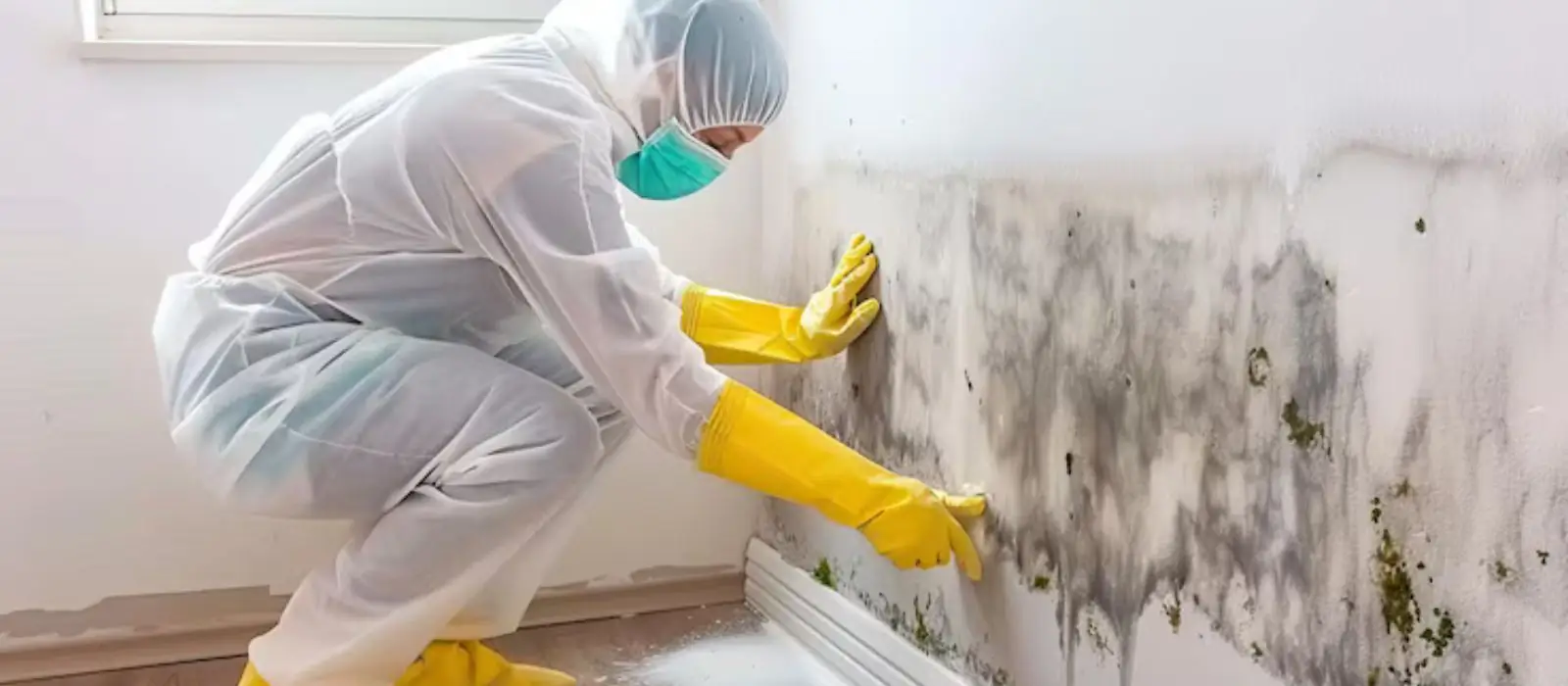
When DIY is reasonable
DIY is a fit for a small surface patch on a hard, sealed surface such as painted concrete or block. The growth should be limited, the wall should be dry or drying, and the moisture source should be known and fixed.
If you can name why the wall got damp, such as a spilled bucket or a leaking hose bib now repaired, cleaning is more realistic. If you cannot name the cause, cleaning is only a guess.
Remember that mold needs moisture. Cleaning a wall that keeps getting wet is a loop, and no cleaning method guarantees it will stay clear.
When to stop and call a professional
| Situation | Why DIY falls short | What to do |
|---|---|---|
| More than a small patch | Larger areas need containment and air filtration | Call for an assessment |
| Drywall or insulation involved | Porous materials usually must be removed | Do not scrub, call a professional |
| Growth keeps returning | A moisture source is still active | Find the source before cleaning again |
| Musty smell with no visible source | Hidden damp materials may be present | Request a moisture inspection |
| Water event came from sewage or flood | Contaminated water needs professional handling | Avoid contact, call right away |
| Anyone has health concerns | Health questions belong to a physician | Consult your doctor and a professional |
If your basement wall is past a small patch, call us and we will assess it before you spend a weekend scrubbing.
☎ Call (385) 988-9410Basic precautions before you start
- Wear rubber gloves, eye protection and a respirator rated for the task if you use one.
- Ventilate by opening a window and running a fan that blows air outside.
- Never mix cleaners. Bleach combined with ammonia or other products can create dangerous fumes.
- Keep children, pets and others out of the area.
- Do not dry brush or sand the surface, which sends material into the air.
- Bag and seal wipes or rags before putting them in the trash.
If you feel unwell while working, stop, get fresh air, and talk to a physician. We do not give health advice.
A simple approach for a small sealed-surface patch
- Fix the moisture source first and let the wall dry.
- Photograph the patch and mark its edges.
- Dampen the surface lightly with a mild detergent and water solution to limit airborne material.
- Wipe with disposable cloths, working from clean areas toward the patch.
- Rinse with clean water and dry the wall using a fan or dehumidifier.
- Check the wall over the coming weeks, and call a professional if growth returns.
This is general guidance for a small, hard, sealed surface only. Unpainted block and other porous surfaces are harder to clean fully, and a professional may be the better choice.
The moisture source must be fixed first
Look for the reason the wall is damp. Common sources include window wells that collect water, gutters that dump near the foundation, grading that slopes toward the house, plumbing leaks, and humid air with no ventilation.
A dehumidifier helps with air moisture, but it will not stop liquid water seeping through a wall. Some fixes are yours, such as extending downspouts, while others need a plumber or a waterproofing contractor.
If the basement has had actual water, our water mitigation crews dry the structure with air movers and LGR dehumidifiers, with daily moisture readings.
What professionals do differently
Professionals begin with a moisture assessment, using moisture meters and sometimes thermal imaging, to find where the water went. They then set up containment to keep material from moving through the house.
HEPA air scrubbers and HEPA vacuums capture fine particles, and affected porous materials are removed rather than scrubbed. After cleaning and drying, they verify that the work met its goal.
Remediation follows ANSI/IICRC S520. If you hire help, ask whether the crew works to it. Our mold remediation team explains the plan before work begins.
What not to expect
No cleaner, spray or coating can promise that mold will never return. If moisture returns, growth can too. Be wary of any product or company that says otherwise.
Painting over a patch, or sealing it in, does not solve a wet wall. If the surface is still damp, coatings can peel and trap moisture.
Spanish Fork note: foundations, sewer laterals and spring water
The city's Water Division supplies drinking water, and the pressurized irrigation line is a separate system with an owner-maintained section beyond the first fitting. A damp basement wall in summer can come from either, so check sprinkler zones near the foundation first.
The city maintains the sewer main up to the property line, and the owner is responsible for the lateral from the property line to the building and for clearing it. If a basement drain backs up and wets a wall, that lateral is yours to check, so call a plumber to camera the line.
The Spanish Fork River has a history of floods, with typical spring flow of 500 to 1,000 cfs. If your basement wets every spring, treat that as a pattern and fix the drainage, not just the wall.
Source types: Spanish Fork City utility pages, city structural design criteria, city flood information page
Frequently asked questions
On hard sealed surfaces, some homeowners use a detergent solution first. Never mix bleach with ammonia or other cleaners. When unsure, ask a professional.
If the growth is more than a small patch, involves drywall or insulation, or returns after cleaning, stop and request an assessment.
No cleaning method can promise that. Mold needs moisture, so the lasting step is fixing the source and keeping the wall dry.
Eye protection and gloves are basic. Ask a professional about respiratory protection that suits your situation. Health questions belong to a physician.
Only testing identifies what is growing, and color cannot. A remediation company can explain whether testing fits your situation.
The city handles the main up to the property line. The owner handles the lateral from the property line to the building. Our crews also help homes in Springville and Provo.