The short answer: it depends on how the water got in
Most homeowners policies cover water damage that is sudden and accidental. A supply line bursts, a water heater fails, a pipe splits overnight. The damage arrives fast, you did not cause it on purpose, and the policy often responds.
Policies usually do not cover damage that builds up slowly. A drip under a sink that runs for months, a roof leak nobody fixed, or seepage from poor upkeep tends to fall under exclusions for wear, neglect and gradual leakage. Flood is a separate matter again, and so is sewer backup.
No article can tell you what your own policy says. Wording, deductibles and endorsements differ from one policy to the next, so read your declarations page and ask your insurer before you assume anything.
Sudden and accidental versus gradual damage
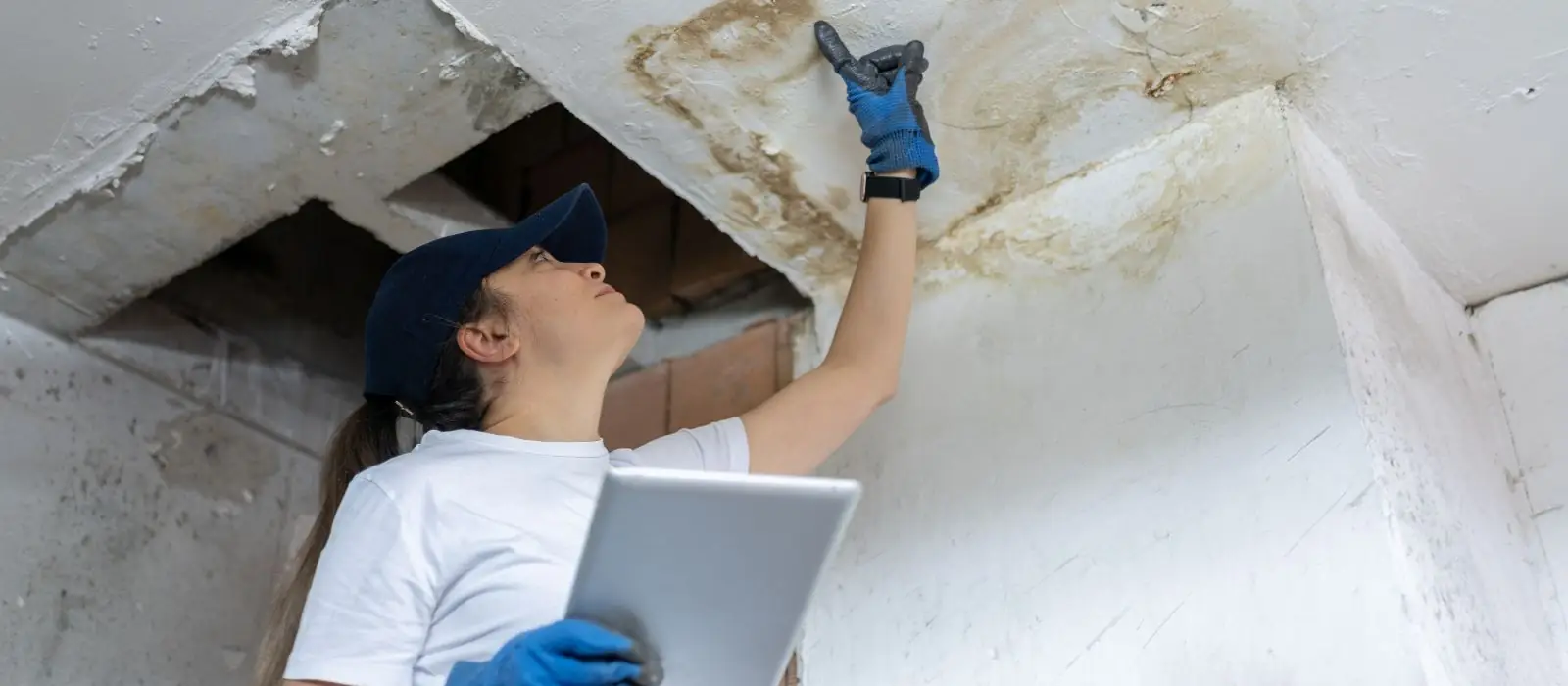
Adjusters look at the cause and the timeline. A pipe that failed this morning is a sudden event. Stained drywall, soft baseboards and a musty cabinet floor suggest water that has been there a long time, and that points toward the gradual-leak exclusion.
This is why speed and records matter. Water that sits in wall cavities keeps spreading, and the longer it sits the harder it is to show when the loss began. Prompt drying by a licensed and insured crew with water mitigation and structural drying helps limit the damage and creates a written record of conditions on arrival.
Neglect is judged on facts, not on blame. A homeowner who spots a small leak and fixes it quickly is in a very different position than one who watched a stain grow for a season.
Event by event: what is commonly covered
The table below shows how common events are usually treated. It is a general guide only. Your policy controls the answer.
| Event | Commonly covered? | What to check |
|---|---|---|
| Burst or leaking supply line, sudden | Often covered | Cause of loss wording, deductible, exclusions for the failed fixture itself |
| Water heater tank failure | Often covered for resulting damage | Whether the heater itself is excluded and how age is treated |
| Appliance overflow (washer, dishwasher) | Often covered when sudden | Maintenance language and any hose or fitting limits |
| Slow drip or hidden leak over time | Often not covered | Gradual leakage and neglect exclusions |
| Roof leak from storm damage | Sometimes covered | Whether the roof opening came from a covered event |
| Sewer or drain backup | Usually needs an endorsement | Whether a water backup endorsement is on your policy and its limit |
| Flood from rising surface water | Usually excluded | Separate flood policy and its waiting period |
| Frozen pipe that bursts | Often covered when sudden | Heat-maintenance conditions if the home was vacant |
Flood and sewer backup are different
The Utah Insurance Department states that standard homeowners policies do not cover flood. Flood coverage comes from a separate policy, commonly through the National Flood Insurance Program. Those policies typically have a 30-day waiting period, so buying one after water is already rising does not help.
Sewer or drain backup is its own category. Many standard policies leave it out unless you added a water backup endorsement. The Utah Insurance Department also notes that the National Flood Insurance Program covers sewer backup only when it is directly caused by surface flooding.
If a backup ever reaches your home, treat it as contaminated Category 3 water and keep family and pets away. A crew trained in water damage cleanup handles the removal and sanitizing, and your insurer decides what the policy pays.
Your duty to limit further damage
Most policies expect you to take reasonable steps to prevent more damage after a loss. Shut off the water at the main or the fixture, turn off power to wet areas if it is safe, and move belongings out of the water's path. Those steps are part of your duty, not an optional favor.
Emergency drying and temporary repairs are usually considered reasonable mitigation. Keep every receipt and ask your insurer how they want these costs submitted. Do not start a full rebuild before the insurer has had a chance to see the damage, unless they tell you otherwise.
Before the crew arrives
Stop the source of water if you can do it safely
Photograph and video every wet room, ceiling, wall and belonging
Save damaged items until your insurer says you can discard them
Write down the date and time you first noticed the water
Document the loss the way adjusters want to see it
Good records speed up a conversation with your insurer. Start with wide photos of each room, then close shots of the damage and of the source. Add short videos that show water still dripping or standing.
A restoration company should supply moisture readings taken with moisture meters and thermal imaging cameras, daily drying logs, and a written scope of work with line items. Ask for those documents in writing. They show what was wet, how wet it was, and what was done.
Water in the house right now? Call our 24/7 emergency line and we will start protecting your home while you contact your insurer.
☎ Call (385) 988-9410Keep a simple claim file. Put your policy number, the claim number, the adjuster's name, dates of each call and copies of every estimate in one folder. When a detail comes up weeks later, you will have the answer.
Steps to take this week
- Stop the water and make the home safe.
- Photograph everything before moving or cleaning.
- Call your insurer to report the loss and ask what the policy requires.
- Call a licensed and insured restoration company to dry the structure.
- Collect the written scope, moisture logs and receipts.
- Ask the insurer about the deductible, any endorsements, and what happens to damaged materials.
If the damage is large, water damage repair and rebuild can be scoped after drying is done, so the insurer sees both phases clearly. The same advice holds for neighbors in Salem and Mapleton.
Spanish Fork note: flood maps and owner-occupied homes
About 80.4% of Spanish Fork homes are owner-occupied, so most losses land on a homeowner policy rather than a landlord's. That makes it worth reading your own declarations page now, before a loss, and checking whether a water backup endorsement is listed.
The Spanish Fork River flooded in 1983 and 1984, and the city's floodplain map uses FEMA zones AE, AE Floodway, A and X. A 2023 letter from the city floodplain manager recommends flood insurance for properties in or near special flood hazard areas. Look up your address at the FEMA Flood Map Service Center (msc.fema.gov) and ask your agent about flood coverage before spring runoff, because of the typical 30-day waiting period.
Source types: Utah Insurance Department flood guidance, City of Spanish Fork flood information page, FEMA Flood Map Service Center, U.S. Census Bureau
Frequently asked questions
A sudden burst pipe is often covered, including the resulting water damage. The pipe itself may be excluded. Check your policy and ask your insurer about your deductible.
Slow leaks are commonly excluded as gradual damage or neglect. Fixing a leak promptly and keeping records helps show you acted reasonably.
The Utah Insurance Department says standard homeowners policies do not cover flood. You need a separate flood policy, and those typically carry a 30-day waiting period.
Call your insurer early, and take reasonable steps to stop further damage while you wait. Photograph the damage first, then begin emergency drying.
No. Only your insurer decides coverage. A company can supply moisture readings, photos and a written scope of work to support the conversation.
The city floodplain manager recommends flood insurance for properties in or near special flood hazard areas. Check your address on the FEMA flood map and talk with your agent about options and the waiting period.