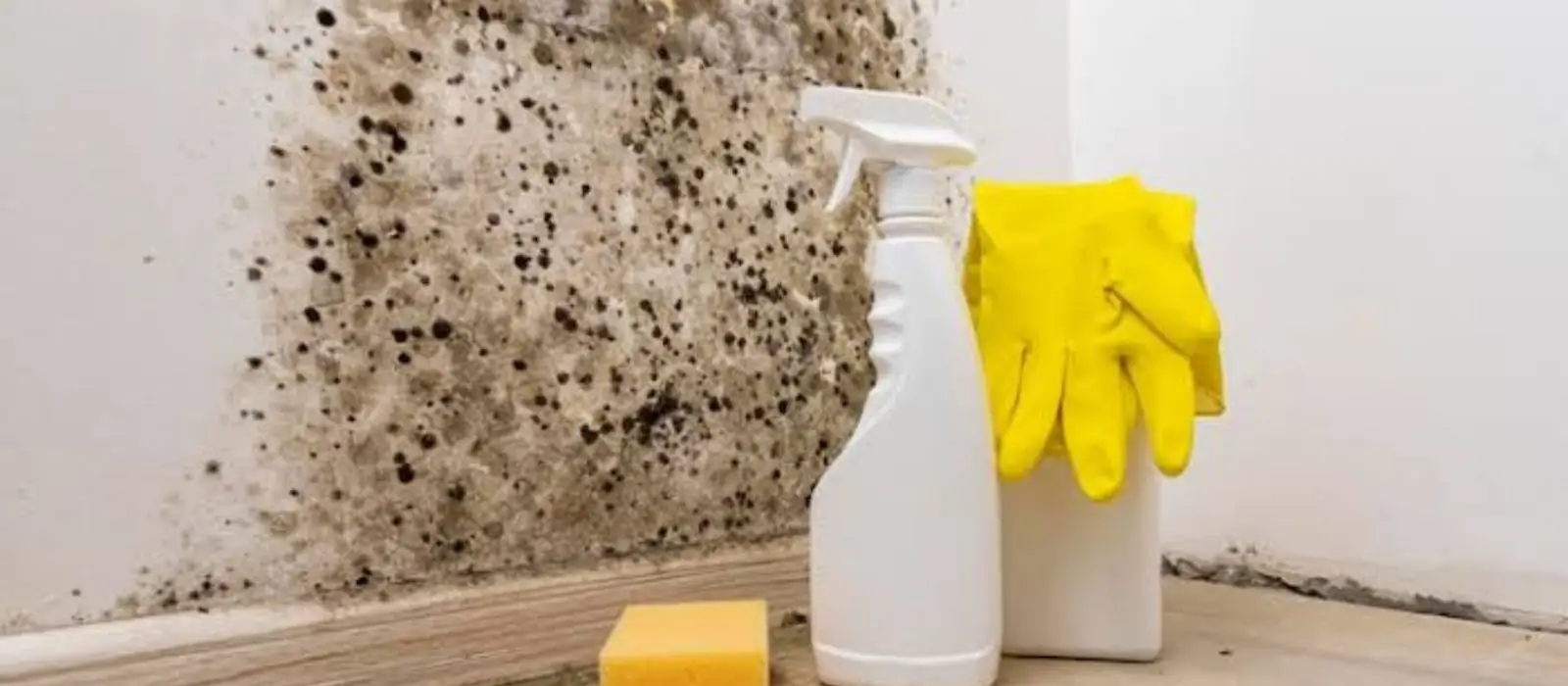
The direct answer
Bleach is a surface product. On a hard, non-porous surface it may remove the look of growth. On drywall, wood, carpet and other porous materials, it does not reach the roots, which sit below the surface.
The part that matters most is moisture. Mold needs moisture to grow, so if the wall or floor stays damp the stain returns, bleached or not.
If you are seeing growth in a basement, start by finding the water source. Cleaning comes second, and removal of affected porous materials may come before cleaning.
Surface growth versus what lies underneath
Mold spreads through fine structures that anchor into the material. On glass or sealed tile, there is little to anchor into, so a cleaner can reach most of the growth. On paper-faced drywall, there are tiny pores and fibers that hold moisture and growth inside.
Bleach is mostly water. When you spray it on a porous surface, the chlorine can stay near the top while the water soaks in, which adds moisture to the material. That is the opposite of what you want.
Because of this, professionals remove porous materials with growth instead of trying to chemically treat them. See how removal works in our mold removal service overview.
Surface by surface: what works and what does not
| Surface | What works | What does not |
|---|---|---|
| Sealed tile, glass, metal | Detergent and water scrub, then dry | Soaking and leaving it damp |
| Concrete and block | Scrubbing with detergent, HEPA vacuum, drying | Painting over damp growth |
| Painted wall surface | Wipe with detergent, fix the moisture | Bleach with no source fix |
| Drywall with growth | Remove and replace the affected section | Spraying bleach on the face |
| Carpet and pad | Remove and discard | Bleach, which soaks the pad |
| Framing lumber | HEPA vacuum and scrub by a trained crew | Sealing over wet wood |
| Insulation | Remove and replace | Cleaning it in place |
This is a general guide. A crew that works to ANSI/IICRC S520 can tell you how each material is handled.
Never mix bleach with ammonia or other cleaners
Do not combine bleach with ammonia, vinegar, or other household cleaners. Some combinations release harmful gases. Many cleaners contain ingredients you may not recognize, so assume mixing is unsafe.
Follow the label on any product you use. Open windows, run a fan that vents outdoors, and keep other people out of the room. Use gloves and eye protection as the label directs.
Basic cleaning cautions
Use one product at a time and never combine them
Read and follow the product label
Ventilate the room while you work
Keep children and pets out of the area
If you are unsure about a product, ask the manufacturer or a restoration professional before using it.
Safer alternatives on hard surfaces
For small areas on non-porous surfaces, a detergent and water scrub is a reasonable first step. Scrub the area, wipe it with clean water, and dry it fully. The scrubbing removes the growth physically, and drying removes what it needs.
Use a HEPA vacuum on dry debris instead of sweeping, which tosses material into the air. Wear a properly fitted respirator if the label for your cleaner or your situation calls for one.
Not sure what you are looking at? Call us and we will look at the area and explain what we see.
☎ Call (385) 988-9410After cleaning, run a dehumidifier and check the surface over the next several days. If a stain returns, the moisture source is still active.
Fix the moisture or nothing else matters
Check for leaking pipes, a dripping water heater, window well drainage, grading that slopes toward the house, and a dryer or bathroom fan that vents into the basement. A moisture meter helps by showing which wall is wet and which is dry.
If a leak caused the problem, water damage cleanup and structural drying come first. Mold work after that is more successful because the structure is no longer feeding the growth.
Keep indoor humidity under control with a dehumidifier and good airflow. No product, bleach included, can promise mold will never return.
When to call a pro
Call a professional if growth covers a large area, if it is on porous materials like drywall or carpet, if it returns after cleaning, or if the cause was sewage or contaminated water. A crew can set up containment and HEPA filtration so you do not spread material through the house.
Also call if you cannot find the moisture source. A technician can use moisture meters and thermal imaging cameras to trace it through walls.
Neighbors in Payson and Salem ask the same question, and the answer is the same: bleach is not the fix. Health questions belong to your physician, not a cleaning product label.
Spanish Fork note: irrigation season and basement moisture
Spanish Fork's pressurized irrigation system typically runs mid-April to mid-October, and the owner is responsible for the line beyond the first fitting after the meter. A leaking fitting or a sprinkler that sprays a foundation wall can keep a basement wall damp, so walk your lines at the start of the season.
The Spanish Fork River flooded in 1983 and 1984, and typical spring flow is 500 to 1,000 cfs. If your basement gets damp around spring runoff, check window wells and grading, and report street flooding or clogged storm drains to Public Works.
Frost depth in city structural design criteria is 30 inches. Foundation walls and buried lines sit through freeze and thaw, so a persistent damp spot on a basement wall deserves a closer look.
Source types: City of Spanish Fork Water Division, City of Spanish Fork flood information page, Public Works, city structural design criteria
Frequently asked questions
Bleach does not penetrate drywall, and the water in it can add moisture. Drywall with growth is usually cut out and replaced.
Detergent and water on a hard surface is a common starting point. Whatever you use, follow the label and never mix products.
No. Never mix bleach with ammonia or other cleaners, since some mixtures release harmful gases. Use one product at a time and ventilate.
No. Paint over damp growth hides it and leaves the moisture. Fix the source and remove affected materials first.
A moisture meter shows whether materials have dried. A restoration professional can take readings and document them.
Street flooding or clogged storm drains are reported to Spanish Fork Public Works. For water inside your home, call a restoration company right away.